
A bunch of people being cooped up in a small vessel with just a layer of metal between them and the cold void of space is enough to bring out the worst, and best, in anyone. This struggle between people and elements, and other people, is fertile soil for storytelling, but it can also be a tricky balance between flashy plot elements and preserving that suspension of disbelief necessary for any fiction. The careful attention to character helps Elaine U. Cho’s Ocean’s Godori strike that sweet spot.
Ocean is an ace pilot and a crack shot with the pistol. In the strict confines of the solar system-wide Alliance, the former is the only thing keeping her employed after some against-regulations heroics with the latter two years ago. If she keeps her head down, she can keep flying—but her captain’s constant reminders of her inadequacies, and of her past, make it hard to keep her head down. Meanwhile, Haven has joined the Alliance in deference to his father, though he’d much rather be home in his religious community. He joins Ocean’s ship as the new medical officer, replacing a long-time friend of Ocean’s. Despite the personnel shakeup aboard ship, the small crew adjusts to the newcomer—another member of the family, whether the captain likes the loyalty they all seem to have toward Ocean or not.
While the Alliance might be the biggest game in town, and the one setting the law, the constant attacks from raiders keep everyone sharp. But no mere mercenaries launch an attack on another Alliance ship, one on which Ocean’s best friend, Teo, is stationed. Teo barely escapes with his life, the only survivor to the massacre. When he finds sanctuary on Ocean’s ship, though, he, and the whole crew, discover the plot goes far deeper than a single attack on a single ship. The only path to salvation might lie in turning to old enemies—and the same qualities that almost got Ocean booted from the Alliance might just be the ones that save their lives.
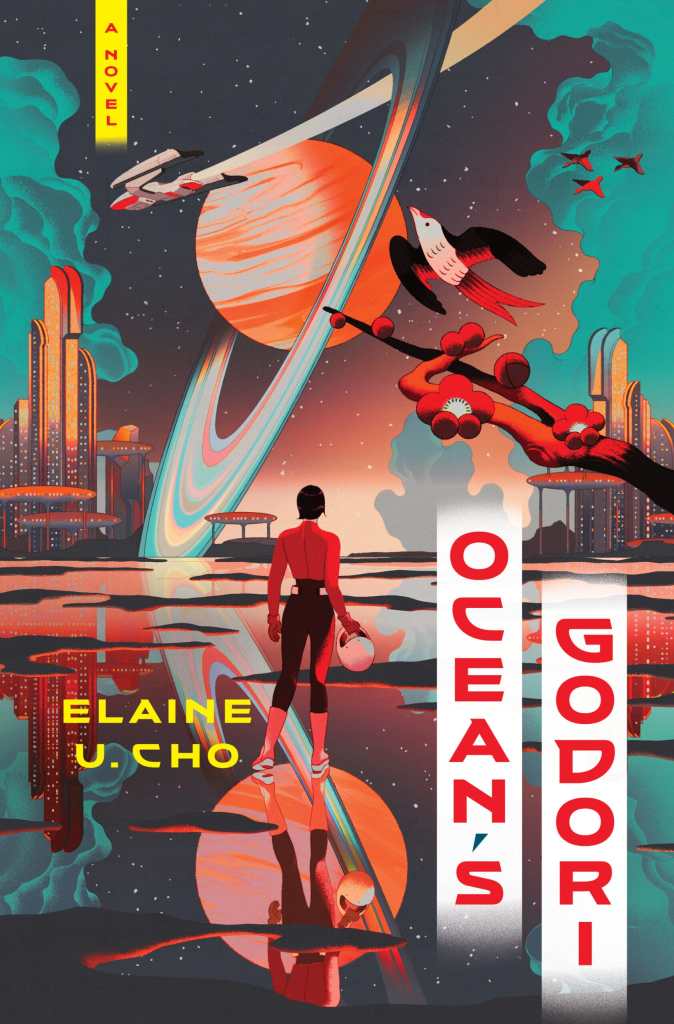
Ocean’s Godori is pitched as Becky Chambers meets Firefly. I suppose the description fits—a strong found family, political intrigue in space, a scrappy crew upon a scrappy vessel. But Cho has crafted something far more special than a simple mashup. Her Korean-centric view of this futuristic world is a fresh take in a sea of U.S.- or China-centric sci-fi on the shelves. Crucially, the setting and culture doesn’t feel like a gimmick so much as earnest exploration of thought about how science and culture might develop if its epicenter were in that region of the world.
But the strength of Ocean’s Godori is in its characters. Across the board, Cho gives her characters individuality, as well as virtues and vices—though not always in equal measure. Ocean isn’t a cuddly character, but she’s the right pick for the star of this story. She has earned loyalty from friends and respect from enemies through her ability to read situations, and people, perfectly, and know what each needs. That quality is one she sometimes uses at great detriment to herself, but loyalty goes both ways. The invisible threads behind the loyalty, though, and Ocean’s surety about what needs to be done despite not having the authority through the Alliance hierarchy rankles her superiors. At a quiet moment later in the book, Ocean’s captain grumbles about the crew and the unwavering loyalty they show to Ocean, not her. “Why does everyone take her side?” the captain asks. Haven replies, “Because she takes ours.” Yet Cho doesn’t just tell us everyone thinks Ocean’s great, or that she’s a little bit of a loose cannon—she gives us plenty of opportunities to see Ocean in action, positively and negatively.
Consequences for pushing or breaking rules, though, is welcome complexity in a media landscape that either rewards rule-breakers, even and especially in organizations like militaries that are famously anal about regulations, or punishes them until they are proven right by advancing circumstances. In Ocean’s Godori, it’s less a matter of who’s right or wrong, and more about suitability and motivation. Ocean’s reasons for joining, and fighting to stay in, the Alliance are deeply personal, even though it’s clear she’s not well-suited for the life inside the organization. Leaving isn’t just a matter of overcoming personal demons or some other internal hiccup; this is the life for which she has trained, and without which she is largely useless. Besides a life of crime, her options outside the Alliance are limited. The majority of readers might not have to figure out where else to use their flight and marksmanship skills, but the costs of jumping out of an industry you’ve grown in is a familiar conflict.
There’s a lot to love in Ocean’s Godori, especially for such a comparatively slim space opera. It seems like there’s a lot more potential in Ocean and in her world, and I hope we get to see more.
 Ring Reads