Multi-level marketing companies haven’t had a good reputation for a while, and recent publications like Hey, Hun, a behind-the-curtain look at MLMs through the eyes of someone who was sucked in by one, or the 2018 podcast The Dream, which examines the promise and cost that many of these companies have on their supposed “consultants.” But I don’t know that any of these have made me as queasy about the definitely-not-a-pyramid-scheme model of these companies as Bridget Read’s Little Bosses Everywhere: How the Pyramid Scheme Shaped America.
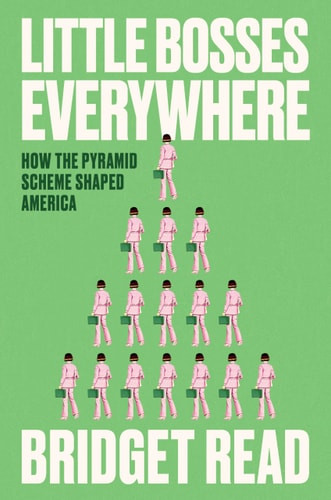
Interspersed with an account of a woman who spent thousands of dollars trying to climb the Mary Kay ladder, Read tells of early “direct-sales” companies and the origin of the nutritional supplement industry, and how those have grown and proliferated. Read also examines how definitions and laws have changed throughout the years, and how the war the influential heads of these companies has been waging against regulation for decades has helped drive us to this current geopolitical moment. That pyramid schemes are inherently predatory toward the already disadvantaged is an old story, but Read’s book expands the pool of victims to, well, all of us.
This isn’t a book that can be described as easy reading. Little Bosses is as captivating as it is difficult to read. At several points, I had to walk away from the book for the day and pick it back up when I felt my fortitude had returned. It’s not just because of the greed inherent in the sort of business model that encourages those at the bottom to incur risk for a fraction of the riches those at the top get funneled to them. That connection I mentioned between these companies and our current moment is compellingly argued, making the book bleed uncomfortably with the news. Just because someone hasn’t been part of an MLM, Read tells us, doesn’t mean they haven’t been personally affected by one.
Read doesn’t try to take a moderate tone when making her case or detailing this history, though she also avoids an overtly antagonistic tone. In that way, there’s likely some benefit of the doubt that at least part of this corporate demographic warrants. (Companies like Avon and Tupperware, which have historically been focused more on the “direct sales” portion of the companies and less about incentivizing building a downline, do get some clarifying defense from Read.) Still, it’s enough to make any reader wonder why these industries aren’t better regulated—and then despair at the answer.
Despite that despair, and my difficulty reading from cover to cover without needing to take a walk or pet a cat, Little Bosses is a worthwhile, and perhaps even necessary, read for this day and age. I know I’m predisposed to find history more important than some, but understanding what has come before and how it has developed into something that is too often reduced to a punchline or an eye roll-inducing out-of-the-blue message from someone in your circle of acquaintances is crucial for grasping what the present actually means.
Here’s a spoiler: greed. It’s greed. All of it, greed. All the schemes and telling other people to chase their dreams right up the pyramid? Greed. Ensuring no pesky legislation gets in the way of profit? Greed. Greed, and power, and there’s possibly an authentic purpose down there somewhere, but that’s like those “fruit” drinks or snacks that are 2% juice; they’re just sugar, and this is just greed. And it’s a greed we can identify better when we understand what the many heads of this hydra look like.
 Ring Reads