It’s been five years since Suzanne Simard’s bestselling book Finding the Mother Tree hit shelves and gave popular and scientific credence to the longstanding indigenous idea of trees communicating with each other in their own arboreal way, but that doesn’t mean the research behind that book has stopped. Simard’s follow-up, When the Forest Breathes: Renewal and Resilience in the Natural World, details her continuing work in the field, as well as how the unexpected success of her first book impacted her life.
For anyone who didn’t read Finding the Mother Tree or who isn’t familiar with Simard’s work in the forests of British Columbia, Simard’s career has focused on forestry, and specifically how to balance forest and ecosystem health with the forestry industry that thrives in that region of Canada. Her research has found that trees depend on older trees for everything from shade during their sapling years to nutrients and moisture during times of drought. Even in cases of disease or other stress, Simard found, the trees could lend support. The need for that support, including for supplemental nutrients, was communicated by way of mycorrhizal networks, which essentially function as a fungus-based tree internet.
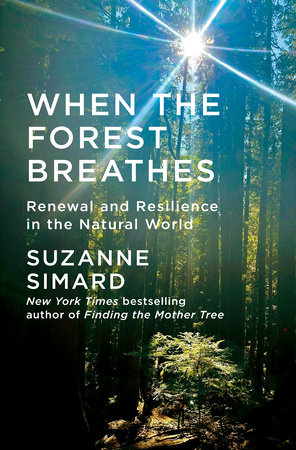
As with Finding the Mother Tree, Simard again blends memoir with scientific recounting. Along with old friends readers of her previous work will find familiar, her daughters and a new generation of grad students and mentees help push the boundaries of regenerative forestry studies. Along the way, the growing gang runs from wildfires and bear encounters, and withstands sinking mud and hoards of mosquitos. The practice of experimentation both inside the lab and out in the field is fun, a peek into a lesser-known profession. The analysis of the results of that experimentation was less fun; quantifying how cooked we are, as the kids say, makes this a heavier read than its predecessor. Simard has a clear call to action, but it’s hard to believe the powers that be care.
While the reception of Finding the Mother Tree was overall positive, When the Forest Breathes is far from free of conflict. Other scientists and forestry specialists challenge her findings, while, shockingly, the logging industry—upon which thousands of Canadians rely to make a living—isn’t eager to radically change harvesting practices on her say-so. As Simard and her colleagues continue their research, she finds little room for compromise between the best practices coming out of experimentation (and the traditions of First Nations tribes in the region) and those used by even the more progressive sectors of the logging industry.
I’m glad I read When the Forest Breathes. It’s got me thinking about forests differently, as well as the trees and shrubs in my own backyard. I think When the Forest Breathes is an important book detailing important work. It just also happened to be a very depressing book. But then, that seems less the fault of the trees than the state of the world we’re inflicted with. If anything, maybe When the Forest Breathes is a rallying cry for common sense, for more radical and gentle action while there’s still time to preserve the world we understand.
 Ring Reads