
The haunted house as a metaphor for or manifestation of abuse and trauma isn’t anything new, but that doesn’t mean it’s overdone, especially not when it’s done well. Or, like in the case of T. Kingfisher’s A House With Good Bones, when it’s so darn fun, too.
Sam Montgomery returns home to North Carolina when the dig she was supposed to work on as an archeoentomologist (bug archeologist) was suspended due to the discovery of human remains. She lives in Arizona but subletted her place for the dig, and now is taking advantage of the extra space her mom has in Sam’s childhood home. It’s been a while since Sam saw her mom in person, or the house, and both have changed—and not for the better. Sam’s mom has lost a shocking amount of weight, while the house, previously colorful and joyful, has been returned to the terse, beige, somewhat racist state that it had been when Sam’s grandmother owned the place. It’s so disconcerting that Sam barely notices the flock of vultures that won’t stop hanging around the house.
Concerned for this turn of events Sam’s mom will hardly recognize, much less explain, Sam starts trying to figure it out on her own. Is her mother developing dementia? Is this some sort of delayed grief from Sam’s grandmother’s death eighteen years before? And why are there no bugs in the rose garden—but there are buried bottles of human teeth? Answers only seem to lead to more questions, many of them wrapped in the barbed memories of Sam’s verbally and emotionally abusive grandmother. Meanwhile, a cute handyman and a witch down the street can only help so much as Sam tries to unravel the mystery, which seems to go as deep as the roots of her grandmother’s prized roses.
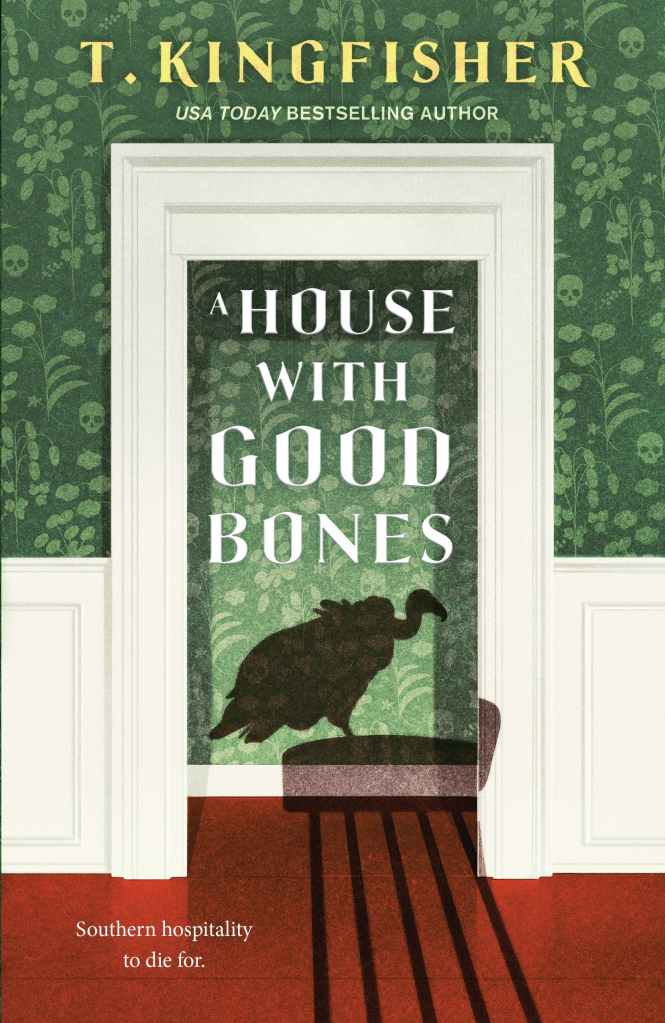
T. Kingfisher writes wide and deep in the fantasy and horror genres, but a strong narrative voice seems to be a constant, and Good Bones is no exception. Sam’s stubborn refusal to suspect anything supernatural until it is sitting in front of her treads on the right side of the line between “reasonable” and “idiotic,” especially with her wariness and deflecting humor. There’s less “the murderer is obviously in there, stupid” and more “you know, that’s probably exactly what I would do if I woke up covered in ladybugs,” which helps the suspension of disbelief. Even Sam’s obsession with the creepy-crawly world feels like a realistic personality quirk, rather than an assigned character trait. The supporting cast—the handyman, the witch, Sam’s brother, and even the neighborhood busybody—all help keep the story fun even when it gets heavy. (I read this as an audiobook, narrated excellently by Mary Robinette Kowal, but I’m sure reading it the old-fashioned way would be fun, too.)
Or scary. There were times listening to Good Bones that I was glad the lights were on and the sun was out, not that the horrifying reveals at the end depend on darkness. Sam’s digging brings more understanding of her mother, her grandmother, and her great-grandfather, but those revelations also come with a realization that some wounds can’t be mended and the choices of her ancestors still reverberate. As a reader, it was hard not to think about the often knotted threads of my own family history, and how choice, or circumstance, continues to inform so much of my life. The house is haunted in Good Bones, but the supernatural danger is far more interested the people than the structure in which they reside.
Although, you know, that’s important, too. This is, after all, a haunted house story.
 Ring Reads