
Scrolling social media can often feel like watching the end of the world unfold in real time. Which tragedies du jour will blow over, and which will change the course of life as we know it? It’s tough to tell in the moment, and being witness to all of them is exhausting. Add in a chronic worry about how much information the almighty algorithms are giving me, and what they’re taking from me, and going online feels as precarious as it is inevitable.
So it’s timely, I guess, that Naomi Alderman’s latest novel, The Future, is here to stoke all of those fears anew.
In a near-future sibling of our reality, survival vlogger Lai Zhen finds herself a target of a religious extremist assassin at a mall in Shanghai. When the tips and tricks that got her a massive following fail her, an app she didn’t even know she had gives her detailed instructions on how to survive. When she gets out of that scrape, she has to figure out why someone would want to kill her—and where she got the app that saved her life.
Meanwhile, Martha Einkorn, the daughter of a cult leader who ran away from her father’s fold, has learned a lot from being the right-hand woman of one of the world’s top tech CEOs—including the harm the company and her boss is doing to the increasingly unstable world. Working together with a handful of others close to the tech-company powers that be, she begins to hatch a plan to turn the tide of the world. Falling in love with Lai wasn’t part of that plan, but she always was good at thinking on her feet.
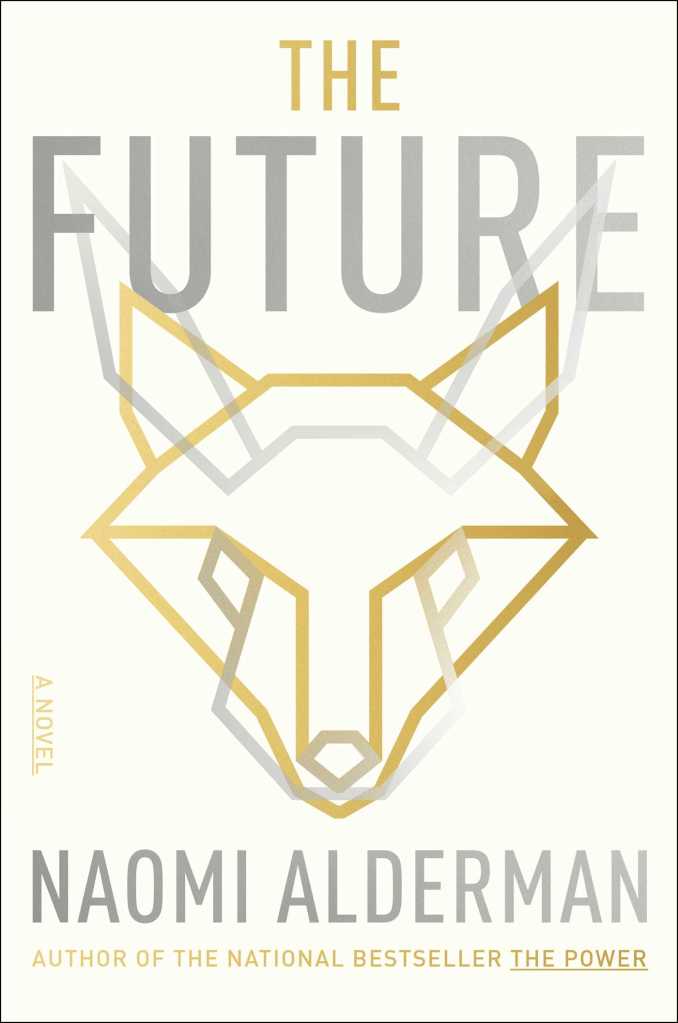
A lot of the elements within The Future are easy to find in today’s headlines: climate change, religious or political extremism, rampant mis- or disinformation, tech companies having enormous international power with seemingly no government to answer to, algorithms knowing more about us than we know about ourselves—the list goes on. It makes the world that Alderman unfolds eerily familiar, and that familiarity functions as a tether through the jumping, crisscrossing, and otherwise shuffled times and places through which we unpack the story. It’s a style of narrative advancement that feels about as orderly as a Bingo game until the last section, but each plot point is fortunately compelling enough to keep going despite whatever disorientation they bring.
As the story unfolds, so, too, does the relevance of the periodic posts from a social media site that might as well be called Definitely-not-Reddit. Long and rambling and circling round and round the Biblical story of Lot—his relationship with his uncle Abraham, his extremely odd prioritization in the face of raiders storming into his house, fleeing Sodom, and the little business of incest that ends his story. The point of these massive posts largely centers on the end of the world, a subject at the forefront of the author’s mind offline, too. While the conclusions drawn from these posts are arguable, the central question of how long a world is worth saving, and what remains when the world ends, has gone round and round in my mind since reading The Future.
The overall conclusion of what Martha and her club of concerned power-adjacents, too, is arguable. Literally, in the case of my partner and me arguing for days about it, based on the spoilery summary I gave him after finishing the book. No matter who wins this particular argument, The Future is something I’ll be thinking about for a long, long time.
 Ring Reads