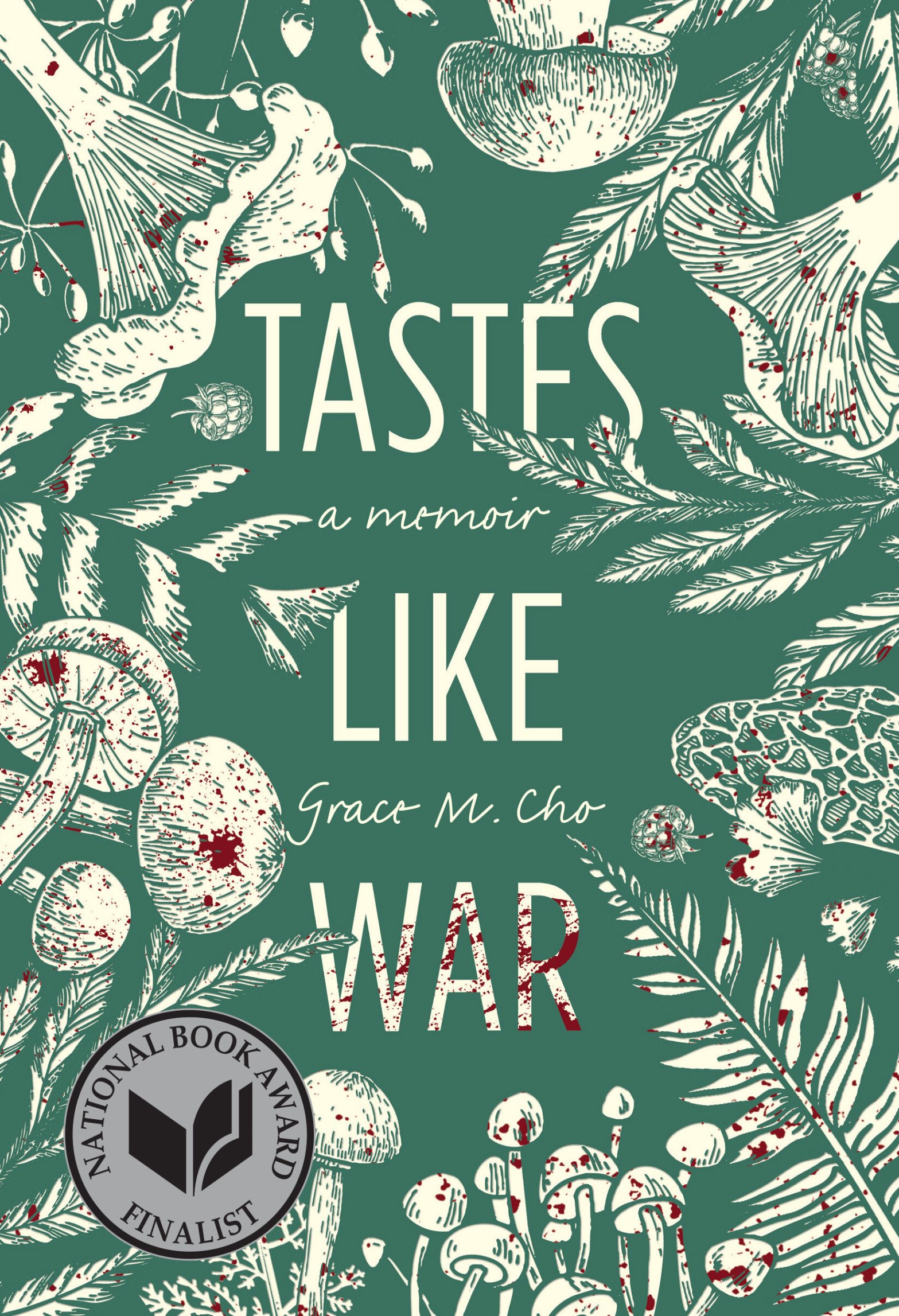
As Thanksgiving approaches, I once again remember the year when I tried making stuffing fancier (and, I thought, tastier) than a box of Stovetop, only to have family members quietly ask where the “normal” stuffing was. Some people like experimenting with their food, but others prefer more familiar flavors. Sense memory like taste can be a powerful tie to memories good and bad, and it’s just one of the elements Grace M Cho explores in her memoir Tastes Like War.
In Tastes Like War, Cho recounts her childhood, adolescence, and young adulthood with her Korean mother and Merchant Marine father, and the inevitable clash of history, race, and culture in her small home and small town. Despite her father’s family living in the town for generations, it’s obvious Cho doesn’t belong. But she doesn’t belong with her mother’s side of the family, either, and her mother’s complicated history with that homeland makes connecting with that heritage more difficult for Cho as she grows.

Tastes Like War is a lot. In under 300 pages, it tackles complex family relationships, trauma, poverty, mental illness, sense memory, and displacement and imperialism, to start with. Even at the tensest moments, though, Cho addresses all with sensitivity and, above all, love. Her mother’s trauma as a young woman during the Korean War, and the schizophrenia that developed years later—potentially as a result of the conditions and stressors of her youth—meant that while her mother could be loving and brilliant woman, she also could be erratic and paranoid. Even the worst of her mother’s illness, though, is written with remarkable compassion.
At the same time, Cho doesn’t shy from difficult subjects. There’s no glazing over her mother’s descent to mental illness, or the fear it brought to Grace—who, with her older half brother off at college and her father working abroad for half the year, more or less had to deal with it herself as a young teenager. And there’s no shying away from the on-again, off-again nature of her parents’ relationship in their silver years. Or the way learning the truth of her mother’s past changes how she understands her in the present.
One constant, though, is food. Tastes Like War is no cookbook, nor should it be. Rather, it explores the relationship between food and memory, life, heritage, and history. Take the kimchi that her mother can’t find for years and then wants to have with practically every meal, or her mother’s reaction to powdered milk that gives the book its name. Food plays a far greater role than simple sustenance in our lives and cultures, individually and collectively. Though Cho’s family isn’t typical by any means, the knots she tries to unravel, and the connection between food and the multi-faceted self, are recognizable far removed from those particulars.
 Ring Reads