
The relationship between author and subject is probably intended to go one way, but who or what a person chooses to write about often gives some insight into who they are. This is blatantly true of Diary of a Misfit: A Memoir and a Mystery by Casey Parks, in which the author’s search for the unknown story of a stranger is as much about her as it is him.
Parks grew up lower class in rural Louisiana, with a mother whose teenage heartbreak and prescription drug addiction made Parks’ young life difficult enough even before Parks realized she was queer in an extremely conservative area. When Parks came out in college, her mother and her religious community shunned her, but her normally stern grandmother offered her an olive branch in the form of a story about Roy, a friend of Parks’ grandmother, who was born a woman but dressed as and did the work of a man. At the time, Roy had recently died, but the story captivated Parks well after Parks moved away from Louisiana and started a career as a journalist.
The story lingers with Parks so much that she recruits two friends to help her make a documentary about Roy—and about how Roy’s neighbors perceived this aberration to the otherwise predictable patterns of Southern life. The same sense of otherness that draws Parks to Roy’s story, though, keeps others in the community from wanting to talk about Roy. Parks has to rely on her mother’s ins with the community to gain access to some of the stories about Roy, and finds some new friends in town more than happy to help with the project. Still, not all secrets are prized away so easily, and Parks has to confront her own reasons for peering so intently into Roy’s life.
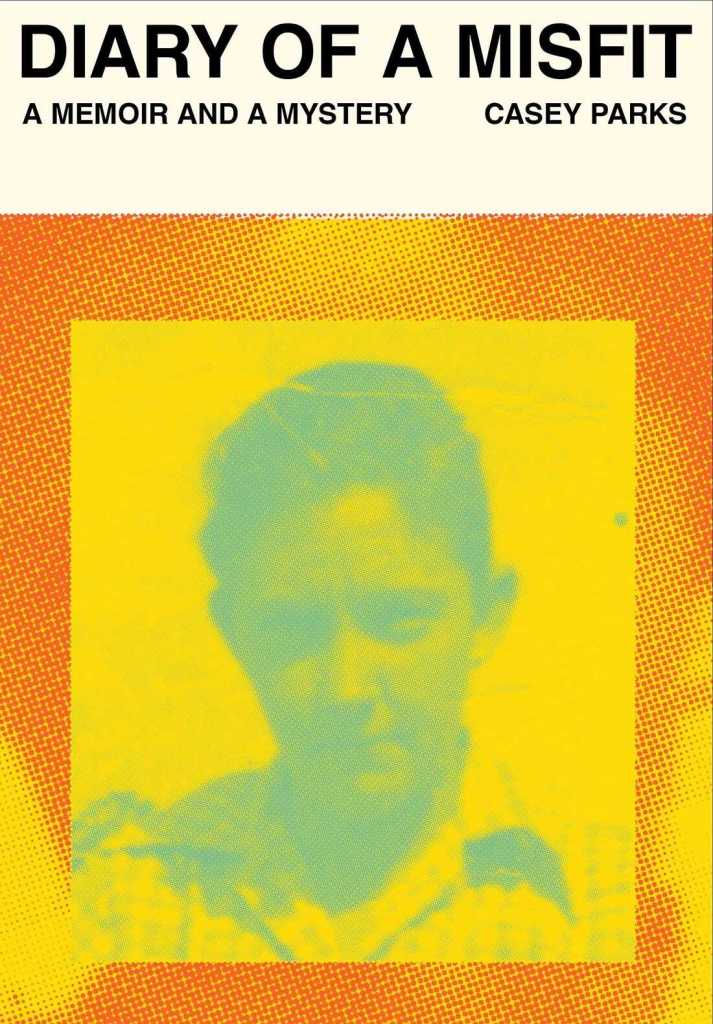
There’s sometimes praise for nonfiction that it “reads like a novel,” though I’ve usually noticed that in reference to histories, maybe true crime made reputable by it being enough decades in the past to separate it from its tawdry paperback kin. As a memoir, though, Diary of a Misfit does have many of the makings, and story arcs, of fiction: a main character with a secret, a dogged pursuit for answers to a mystery, a forced reconciliation that waxes and wanes due to human foibles. But Parks’ honesty about herself and her relationships lends a sense of honesty that tugs it out of any fictional realm. With her family relationships, Parks doesn’t pull punches, and the ongoing abuse—even if she doesn’t call it by that name—she received as a child and into adulthood can be tough to read. It’s hard not to feel suspicion about her mother’s attempts at reconciliation and sobriety, even near the end when they do seem genuine. And it’s hard not to feel sympathy for her father, who, though far from perfect himself, was subjected to much of the same, and other, abuse that came with loving a woman as complicated as Parks’ mother.
At the same time, Parks’ relationship with herself, as a gay woman from a place where anything but the heteronormative is taboo, likewise fluctuates based on her feelings about her family, her dealings with her early memories, and the acceptance or lack thereof for LGBTQ+ rights in the U.S., which do change drastically during the eleven years the events in this book take place. And then there’s the subject of this whole endeavor: Roy. Throughout the book, Parks’ investigation encounters people who regarded Roy as a curiosity, as a deviation, as a lost and confused person, and everything in between. But the vast majority of recollections about Roy seem earnest, if what would be considered today as ignorant. It’s easy to see why Parks latches onto a story about another queer person in her neck of the woods, and how understanding him might help her better understand, in many ways, herself.
Maybe that’s not the purest reason to go on a decade-long quest, but, then, what is a pure reason? Whether or not she finds the understanding or acceptance she’s looking for, Parks’ work highlights a small life, an overlooked life, and gives nuance to a community that may not have intended to give any but couldn’t wholly turn away from a good-hearted person who was plainly mistreated and misunderstood by too many around him.
 Ring Reads