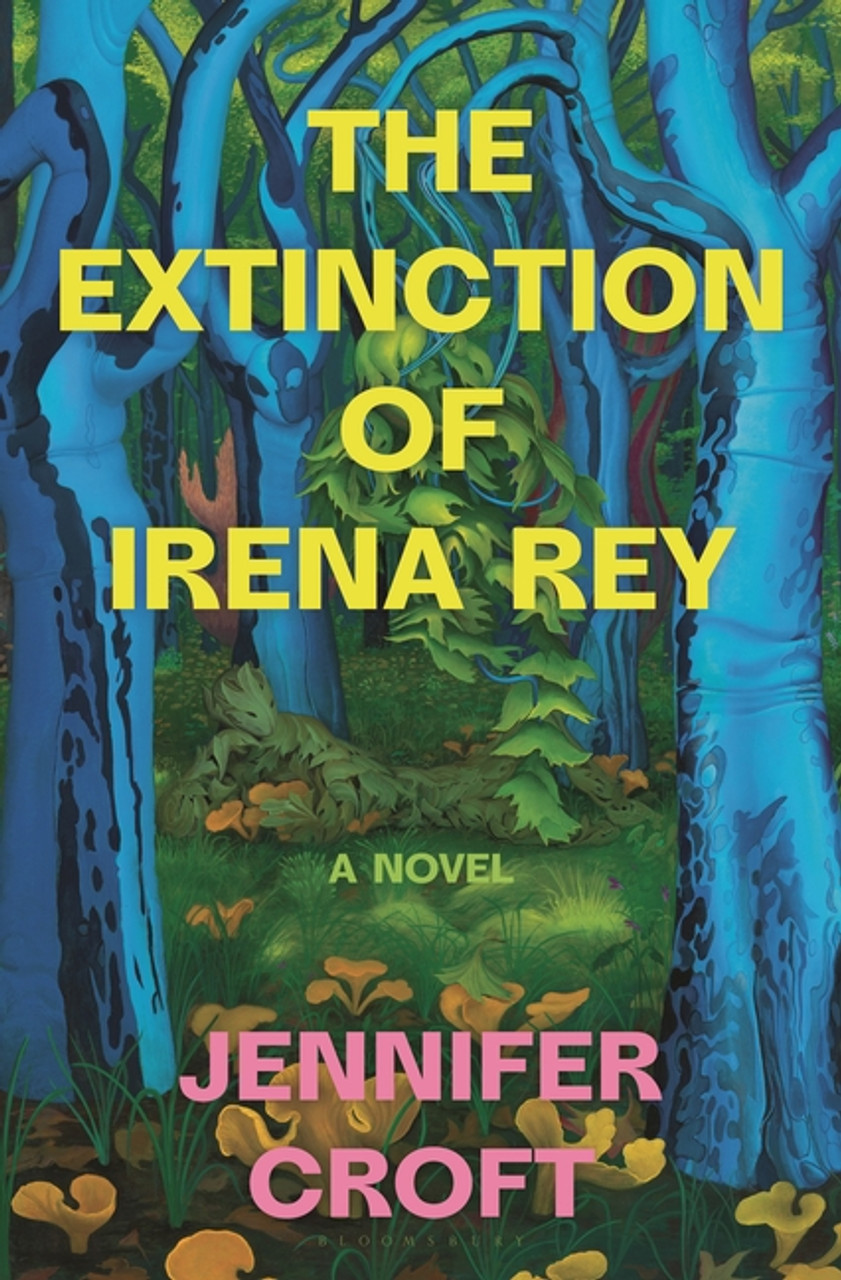
No matter how skilled a translator is, there will always be things lost in translation—some nuance to a word, some untranslatable turn of phrase, or choices made by the translator that might not be fully faithful to the text. The loss in translation that comes from an unreliable narrator can likewise obscure a story. Those two elements mingle intriguingly in award-winning translator Jennifer Croft’s The Extinction of Irena Rey.
Eight translators have gathered in the home of a renowned Polish author, the titular Irena Rey. There, on the edge of a primeval forest, they prepare to translate her latest masterpiece into their respective languages. But just days into their summit, Irena vanishes. Her absence is only the first in a start of bizarre events, including the group being shot at by a rogue archer and devising a plan to keep developers from razing a portion of the forest. Meanwhile, they discover her manuscript, allowing them to do what they came to do amidst the chaotic events. Not even the pull of translating the work of a master can preserve them from the fracturing of their years-long professional relationship that teeters this translation summit into violence.

The story itself is interesting enough, but the real draw in Extinction is the social ties, and knots, that pull the plot in various directions. From chapter one, the characters are referred to only by their languages: English, Ukrainian, French, German. The narrator, Spanish, recounts everything in “we” and “us” as the group fairly worships Irena, and only the newcomer, Swedish, cares to remark on Irena’s strict rules for the summit. The turning of titles into names is the first of many fractures. But even before that outward fracture, there are signs of a weakening of Irena’s power. In many ways, the story is really about the unraveling of a myth and the deconstruction of the person inside.
I mentioned story lost in translation, and Extinction embodies that on multiple levels. A “translator’s note” at the beginning prefaces the story with a cryptic defense from the “translator” of the book, who adapted it into English from its original Polish. There is something lost in the translation to English, the “translator” says, but also that there was likely something lost in the original, as its “author” is a native Spanish-speaker. The rest of the note means little at the outset of the book, but became something I returned to as the events alluded to earlier unfolded on the page. The footnotes sprinkled throughout further show the struggle between author and translator, though more literally in this book than in your average work in translation. Sometimes the footnotes are merely explanatory; sometimes, they contribute to a larger interpersonal conflict. The latter has a narrative purpose, but perhaps it also allows Croft to show the uninitiated the wrestling that comes with translating any work.
Regardless, the footnotes also contribute to the main story, bringing a compelling second voice to what we come to realize is an increasingly unreliable narrator. The Extinction of Irena Rey is a layer cake of fascinating and thought-provoking elements, all of them strong enough to hold a story on their own but working together deliciously.
 Ring Reads