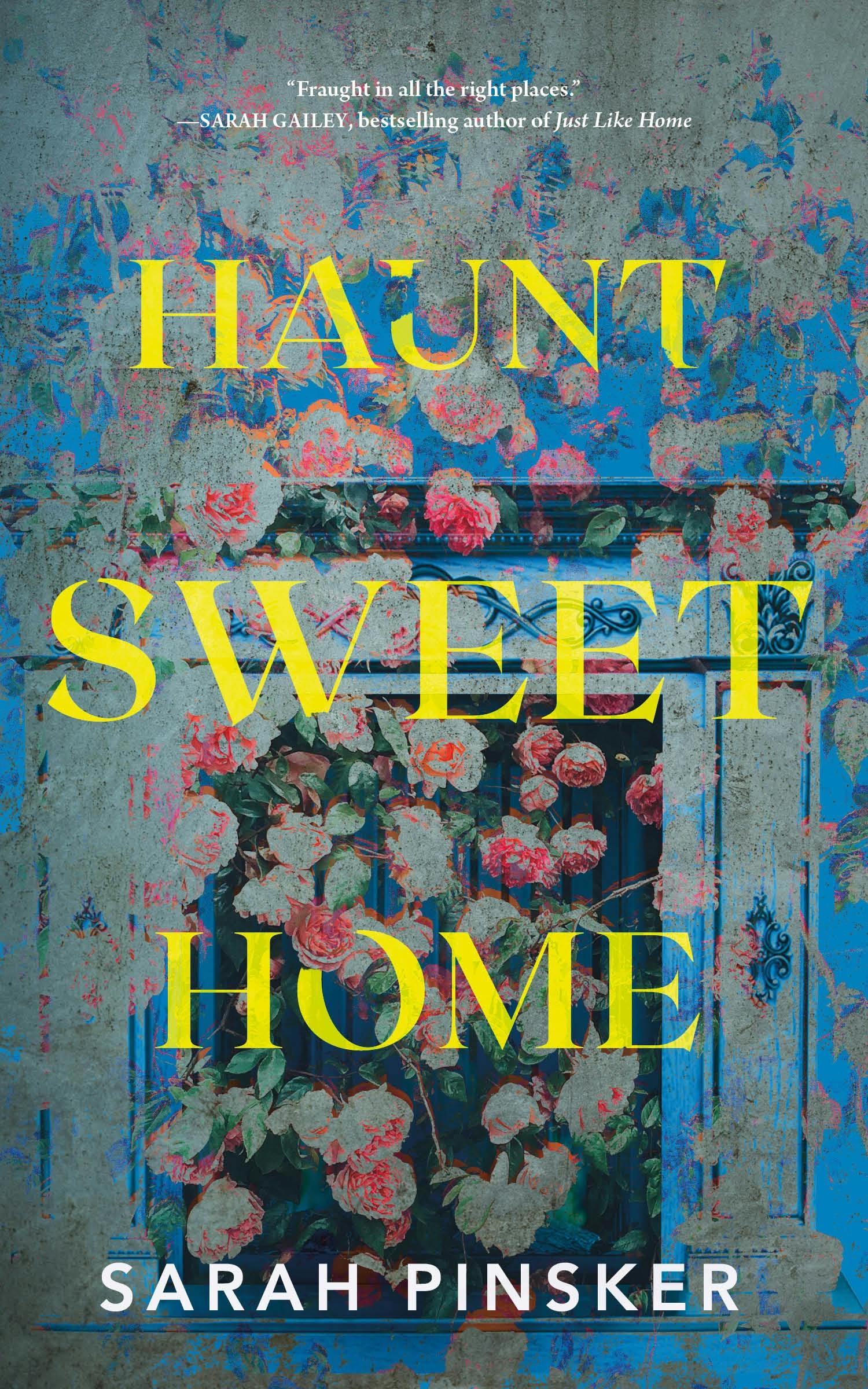
By now, we’re pretty aware that “reality TV” is much more weighted on the latter than the former. But what it takes to make the unreal look real, and good enough for the small screen, is an art—or, maybe, just a lot of effort from overworked and underpaid production assistants. That’s the case in Sarah Pinsker’s latest book, Haunt Sweet Home.
Mara is still drifting about between community college and dead-end jobs a few years after it’s socially acceptable to be so directionless. An unexpected offer to work as a production assistant on her cousin Jeremy’s reality TV show, then, is, if not a godsend, at least something steady to do for a while. Jeremy isn’t a regular visitor on his own show, but Mara’s other coworkers are nice enough, and despite working exclusively nights, the work itself is fine. For the titular Haunt Sweet Home, Jeremy and a crew come to old homes or properties owners suspect are haunted—and Mara and her coworkers make sure those suspicions are proven true. Most of the incidents Mara’s in charge of causing are small: setting up a fog machine in an orchard, for example, or occasionally making a ghostly cow noise in an empty pasture.
She may not see Jeremy very much on the set of his own show, but Mara is getting the hang of this new direction in her life. Still, having a stable job doesn’t take away from how directionless she feels in the rest of her life. That sense of not fitting correctly in her own skin lingers no matter how well she’s doing at work, almost like she’s haunting her own life. As Mara gets closer to Jo, a new friend from the daytime shift, the cracks in her facade become more and more obvious. Her demands at work are increasing, too, as is the apathy just beneath the friendly surface of most of her colleagues. Increasingly, the only solace Mara finds is in whittling on a hunk of wood from an early shoot—a creation that almost seems to have a mind of its own.

Hauntings and ghosts are more a setting for much of Haunt Sweet Home than the page-to-page material; it’s categorized as a paranormal fantasy, and that rings far truer than sticking this with the angry ghosts and blood-spattered pages of the horror genre. There’s something almost cozy about Mara crouching out of sight of the cameras, moaning spookily into the darkness. Far more present are the metaphorical ghosts of what could have been if Mara were just a little more this or tried a little harder at that—the familiar kinds of loneliness and uncertainty and regret most of us experience in our twenties, heightened in the arc of the story. Even the job Mara takes, working nights and living in a motel and her car, is the kind of thing most people would only take before putting down roots into anyplace, anything, or anyone. Pinsker renders this kind of listless and desperate discovery, as well as the refusal to acknowledge said listlessness and desperation, perfectly in Mara.
This is not to say there are no literal ghosts here—though any details of how they factor in would constitute a spoiler, and Haunt is too fun to ruin its surprises about what’s real and to what degree. I can, however, safely say that there’s just as much heart in Haunt as in any of Pinsker’s steady stream of excellent short fiction. The speculative elements are not window dressing for character and story, but they are the scaffolding upon which the rest of the story is built—and the pressure that brings it all to a head. I’d watch Haunt Sweet Home, but I liked reading about it even better.
 Ring Reads