
Head’s up: today’s review, and book, discusses self-harm. Read mindfully.
Loss can come in many forms, and so can grief. Knowing that doesn’t make it any easier to experience—or, as Sloane Crosley explores in her latest book, Grief Is for People, to explain to others why a lost person (or place, or thing) meant so much. But whether it’s a best friend or an accessory, there’s often far more encompassed in grief than just the thing we lose.
Crosley comes home from a doctor appointment to find her apartment has been ransacked in the hour she’s been away, and the thief has taken her jewelry and broken the antique porcelain chest she kept them in. Security footage will show the thief waited for her to leave, scrambled up the fire escape, and left with loot in hand five minutes later. Why she was targeted was a mystery: Crosley didn’t have any collection of jewels for someone to walk off with, though she did have some nice heirloom pieces that represent all she has left from her grandmother. The chest, too, holds memories: it was purchased at a flea market with her best friend, Russell, whose infectious presence has spread to most of Crosley’s memories, and belongings. Add that to the eerie feeling of being targeted and your space invaded, and it’s no wonder that the theft rattles Crosley.
She ruminates over the reasons for feeling so unsettled over the theft for approximately one month, when Russell’s sudden suicide. Rather than her best friend’s death usurping the loss of a few trinkets, it magnifies it. This amber necklace or that tiger’s eye ring might have belonged to her bitter grandmother, but Russell commented on them frequently. Her wearing of those pieces to events Russell was at means his memories are perhaps more present in the metal and stone than her grandmother’s. Their loss, then, represents losing Russell in another way, even if the theft happened before his death. Grief can make people do funny things—something Crosley notices even as her means of coping spiral from repairing the chest to planning a sting operation on an eBay seller’s apartment. But mostly, grief is a thing people tend to talk about in only a few ways, and those ways don’t encompass even half of the ways we mourn.
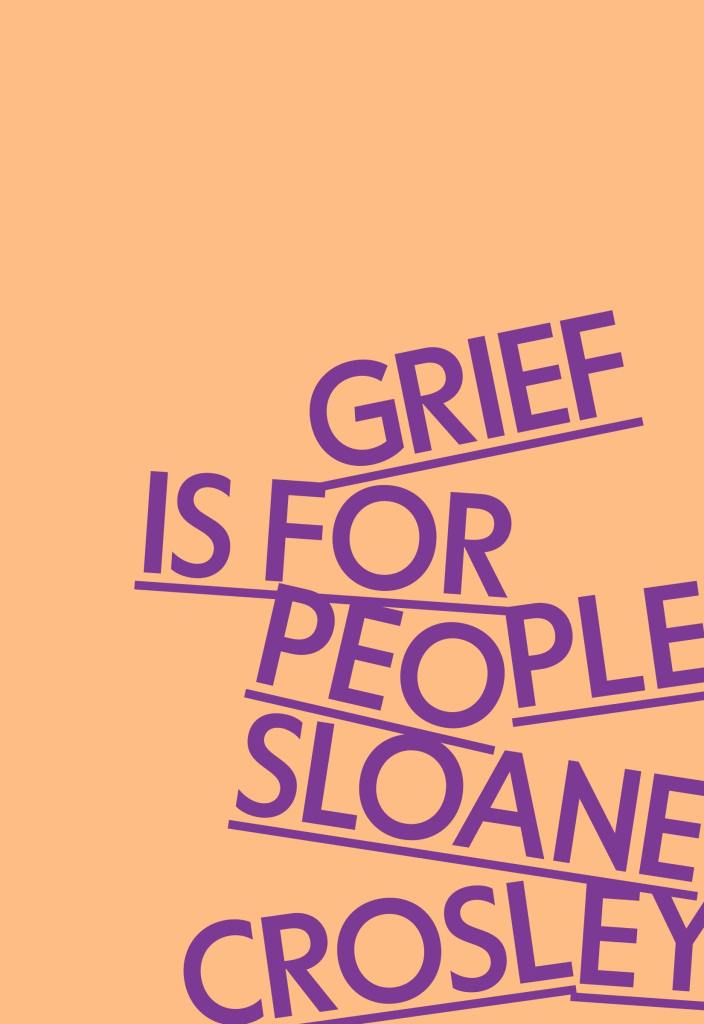
Crosley’s story is a compelling one, and a one-two punch of relatability just by the events alone. Most people have been the victim of theft of some kind; even more of us have grieved—are grieving—someone(s) close to us. Likely all of us have imbued objects with more importance than their monetary value or usefulness at some point. More than that, though, Grief Is for People is just so darn personable. Crosley’s writing brings the events, and her emotions, to life, and helps make her every action and reaction reasonable, even, and especially, when she knows they’re not. It is that prose-level finesse, not the subject matter, that helps keep this slim volume feeling relevant even when it occasionally strays into self-indulgence.
By design or accident, processing her grief over her friend and her belongings requires Crosley to consider how her life has evolved during the course of each of these relationships. Crosley and Russell worked in the publishing industry, which underwent a veritable paradigm shift in the course of their time as coworkers. Russell’s boisterous personality made him king of the hill in the industry in the 90s and into the early 2000s; by the end, when he was publicizing the likes of Fifty Shades of Grey instead of James Joyce or Nora Ephron and when “Me Too” brought new scrutiny to propriety in workplace interactions, that same brashness made him an HR nightmare.
The lasts always become more important after being defined as such, she writes, like Russell’s last social media post, or his parting words when they met just hours before his death. Episodes that would have become just one grain of sand in a beach’s worth of memories suddenly holding new weight, new profoundness. It’s hard not to wonder, no matter how someone vanishes from our life, if some other action or inaction on our part could make a difference. Crosley considers this time and time again with Russell, and with her break-in. If she had only thought to lock her third-story window before going out for a quick errand. If she had only kept Russell from going home for a little longer. An endless stream of what-ifs entwined with memories and regrets, all of it spun into that complex thing we call grief—whether for a person, or a thing, or just an ended chapter of our lives.
 Ring Reads