There are so many great books to read and consider and review from every publisher and imprint, but I’ve been trying to lean into more smaller presses, which don’t usually have the budget to market like the big publisher top-listers have but can take more creative risks and represent more voices.
As with any new book, there have been some misses, but I’ve also found some new favorites I might not have discovered otherwise. Widening my scope for new books has paid off again with The Nightmare Box and Other Stories, the debut collection from Cynthia Gómez that explores justice and injustice, mostly for characters on the margins of Oakland.
Over the course of a dozen stories, we meet a recently turned vampire, a queer man who finds a magical shop when he needs it most, a witch who starts to wonder why her services keep being directed to figures in the civil-rights movement, a foster kid with a big secret, a new play on the mysterious hitchhiker trope, fiction come to life for one graphic novelist, a teachers association a little too focused on keeping its members happy, and more. There may be a supernatural tinge to all of these stories and their corners of the East Bay area but their real-life grounding in problems big and small keeps even the more outrageous feeling all-too plausible.
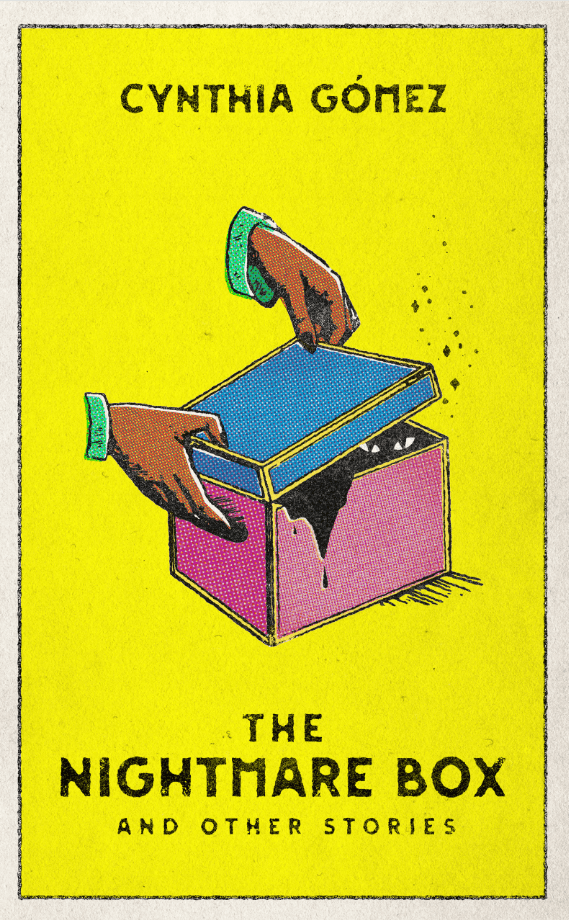
There’s little unevenness in The Nightmare Box, and even the stories that seemed weaker to me largely felt like a matter of opinion or this or that story not hitting this particular reader just right, rather than one of quality or plotting. Without fail, Gómez’s writing sings in each one. Among the standout stories, though, was “Will They Disappear.” While real situations or historical (or present-day) injustice serve as the basis for most of Gomez’s stories, “Will They Disappear” takes recognizable inspiration from the horrific real-life story of Jennifer and Sarah Hart, a white couple who adopted six Black children, abused them for years even as they dodged CPS and the children’s family members, and ultimately drove the family minivan off a cliff with everyone inside. That true horror hasn’t yet gathered dust, making this particular story difficult to read—but also satisfying, as the supernatural abilities of one child allows the victims a small means of fighting back against their abusers. In a way, “Will They Disappear” feels like revisionist history, giving a supernatural tip to the scales to give some measure of justice.
“The Road out of Nowhere,” on the other hand, pits postmortem justice against moving on as a soon-to-be father has to decide whether to take a mysterious hitchhiker-who-is-definitely-not-the-devil up on the offer to face his friend’s murderer or give up and return home safely. There’s a justice of another kind in “Red Brick,” in which an immigration officer is haunted by the ghost of a man killed during an unnecessarily rough operation, and “The Unburied,” when the just deserts are from good old-fashioned greed. “Huitzol and the Rope of Thorns” pits an animate puppet of the titular fictional god against racial profiling and police malpractice in a story that’s different flavors of tense in its setup and its resolution.
There are few happy endings in The Nightmare Box, though it does seem that Gómez intentionally left off on one of the more optimistic stories (does it still count as optimistic if it’s at the beginning of an uprising of frozen ghouls?)—an unexpected choice but one that ultimately informs the way we leave The Nightmare Box: fully aware of the horrors, but pressing forward nonetheless.
 Ring Reads