
No matter how a loved one dies, there are always things you wish you could say or ask. In Lost Souls Meet Under a Full Moon, a bestselling novel in author Mizuki Tsujimura’s native Japan and recently translated into English by Yuki Tejima, you can do just that—for just one night.
There’s a rumor going around that you can call a number and reach a “go-between,” someone who will request a meeting between you and someone who has died, totally for free. There are rules to it, of course. You can only meet with one dead person, and any dead person can only meet with one living person, ever. The dead can choose whether or not to accept a meeting request, and meetings can occur only for the length of one night (and are longest during the full moon, hence the title). These meetings can’t be repeated, whether the living person attends or not.
The people in Lost Souls desperate enough to find out whether this rumor is true or not are Hirase, a fan of a recently deceased celebrity who’s pretty sure she owes her life to her; Hatada, the cutthroat scion of a family business who needs a little technical help from his deceased mother; Koichi, a heartbroken young man working himself to death after the disappearance—and, it turns out, death—of his fiancée; and Arashi, a high-school drama star who is afraid her new theater rivalry with her best friend led to the other girl’s death. The common thread among them all is Ayumi, a go-between-in-training who’s learning the family trade even as he cares for his ailing grandmother and grapples anew with the apparent murder-suicide of his parents when he was a young child.
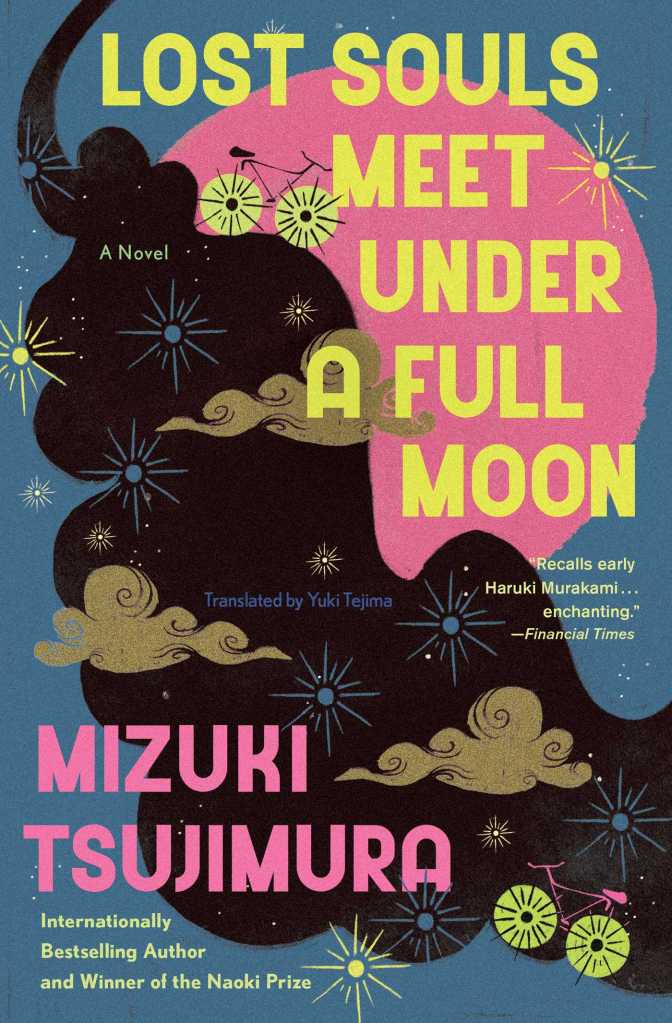
The four aforementioned seekers of these meetings into the afterlife represent relatable facets of grief, and love. Hirase didn’t know her idol personally, other than a possible chance meeting once that Hirase believes literally saved her life. Even if that wasn’t a celebrity that helped her that night, the parasocial relationship she formed with her has been strong enough, in the absence of realer relationships, to warrant this pilgrimage. That’s contrasted with Arashi, seeking penance and solace in all the guilt she’s felt over her friend’s death. The jealousy and suspicion that led to hurt feelings was only a blip in a long and meaningful friendship, but it’s the blip that colors the whole friendship because there was no opportunity for redemption. Each story is distinct and self-contained enough to set the book down between chapters, letting you ruminate for as long as you like.
I felt that was the point of the book, examining love and relationships in these various ways, but the back-cover matter seems to put more weight than I expected on Ayumi’s part. Not quite a psychopomp and not quite a psychic, he’s learning at the hands of his grandmother, for whom acting as the go-between is both a public service and an honorable obligation. At the same time, it’s clear she’ll be on the other side of the life-death divide sooner rather than later. Despite her abilities, she can’t call up any deceased loved on herself, a challenge that Ayumi also faces as he contemplates both taking over for her and losing her. You expect more answers than questions out of someone who negotiates with the dead, I suppose, and his feeling through his own coming heartbreak and the customer-service aspect of this apprenticeship is relatable.
And self-contained, I felt, until reaching the teaser for a sequel. It’s a final gift from this slim novel, in a way: if you like it and leave satisfied, great, and if you like it and want more, good news! (If you didn’t like it, well, it wasn’t a very long book, anyway.)
 Ring Reads