In any book that’s made up of multiple parts, there’s always a risk of one being more compelling than the other, or for the relationship between the two to be confusing before the intended connection is clear. Those questions are central to the tension in Mass Mothering, the latest novel from Sarah Bruni.
The first of Mass Mothering‘s two parts, Field Notes, contains excerpts from a book chronicling the disappearance of sons within a community, particularly the effect of that mysterious mass loss on the women—the mothers and sisters—left behind. In the second, an out-of-work teacher and amateur translator known only as A. becomes enamored with a book owned by her sort-of-boyfriend. Her interest in the book outlasts that of its owner, and A. decides to translate it. Her first step is going to the book’s country of origin for context, and to answer questions that linger after reading.
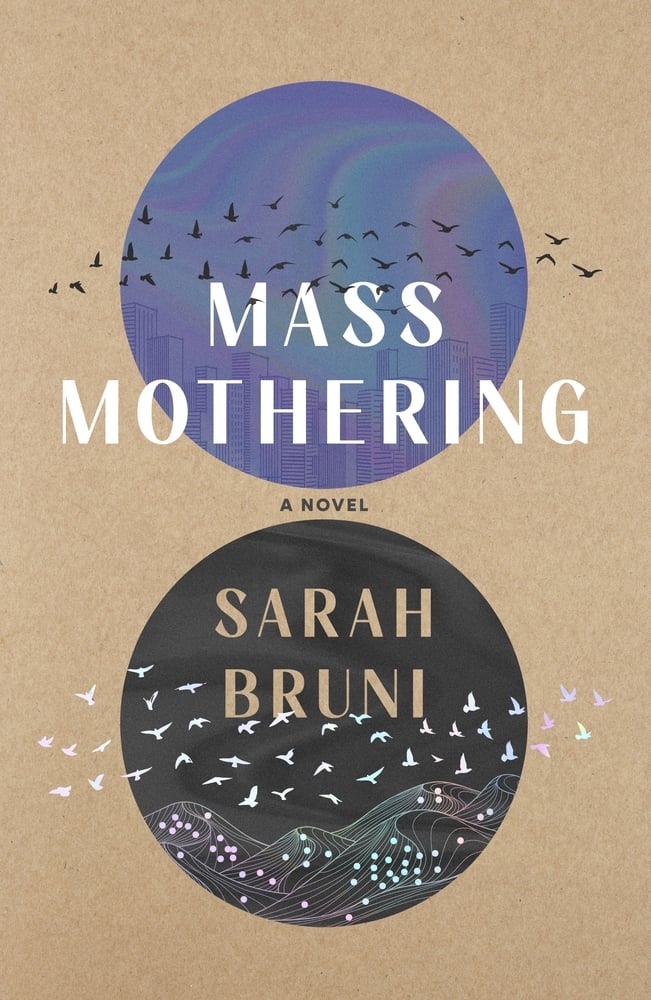
I mentioned the inherent risk in multi-narrative stories of one section being more compelling than another. In Mass Mothering, the mystery at the heart of Field Notes makes it more gripping out of the gate. A.’s story does become progressively more interesting throughout the course of her narrative, but it’s hard for mid-career ennui to compete against the kind of grief and loss and questions at the heart of Field Notes. Rather than the two narratives competing, A.’s seems to serve as an audience surrogate as she discovers the text and seeks more answers than it provides. Her thoroughly U.S. perspective also anticipates the reader’s background as she delves into the sort of near-unthinkable political disorder that could allow so many children to simply disappear with seemingly no concern from authorities.
As the title suggests, the theme of mothering, or the forced halt or prevention of, is central to both stories. The women interviewed and observed in Field Notes may still be mothers, but it is, as the book suggests, a different kind of mothering than a mother might do were her child still present. A., meanwhile, has had the choice to become a mother or remain childless taken from her after a cancer diagnosis and swift, radical intervention shortly before the events of her narrative begin. There is surrogacy in the loss she reads of the other mothers, both losses of children, though for A. that loss is of potential rather than a child named and raised.
For me, unraveling the mystery was the thing that had me turning pages—thoughtfully, in the case of Field Notes, and impatiently in A.’s sections. But Bruni seems to be much more interested in what A. takes from her experiences puzzling out the context surrounding Field Notes. In fact, the literal connections between the two narratives feel far from A.’s mind as the final few pages of the novel turn. Instead, it’s that much more ephemeral connection, that theme carried silently among mothers of all types, regardless of their country of origin or how many children they have or in what condition, that carries A., and us, into the future that unravels beyond The End.
 Ring Reads