
If you distill the most quintessential parts of summer—the sticky heat, the feeling of freedom despite your school days being long behind you, the sensation that maybe everything could change under the blazing sun or the cool moon even though you know it probably won’t—and turn it into ink, the book that ink would write would look a lot like Christine Lynn Herman’s latest novel, The Drowning Summer. I read it inside, curled up with a glass of lemonade, and I’m glad I did because I couldn’t put it down. If I had read it on the beach, I’d be burned to a crisp.
Mina is the latest in a long line of mediums, and all she wants is for her mom and uncle to bring her into the family business instead of keeping her at arm’s length like they have been. They need her help, too—the spirits in the water around Cliffside Bay have been unusually active lately, and it’s too much for just two mediums to handle. Mina is sure she’s inherited the family gift, because why else would she hear the spirits whispering to her? The ghost-talking lessons she has been hoping for get complicated when a mark resembling a sand dollar appears on her wrist and burns when spirits are near, and Mina knows her overprotective mom can’t know about it.
Meanwhile, Evelyn has her own problems, starting with her boyfriend throwing her under the bus for helping him cheat. If her academic aspirations drown, she’ll have nothing left; six years before, her dad was the prime suspect in the murder of three teenagers. It was only thanks to a summoning she did with her then-bestie Mina that kept him from being locked up, but her family, and reputation, is still in shambles. A repeat of that summoning ritual makes the cheating accusation go away, but now she feels the pull of spirits in the water. Evelyn and Mina have been estranged since that summer, but they reconnect now to solve their respective ghost issues. The more they look, the more they realize that these problems are directly connected to the murdered teenagers—and that the underlying source has been plaguing the waters for decades.
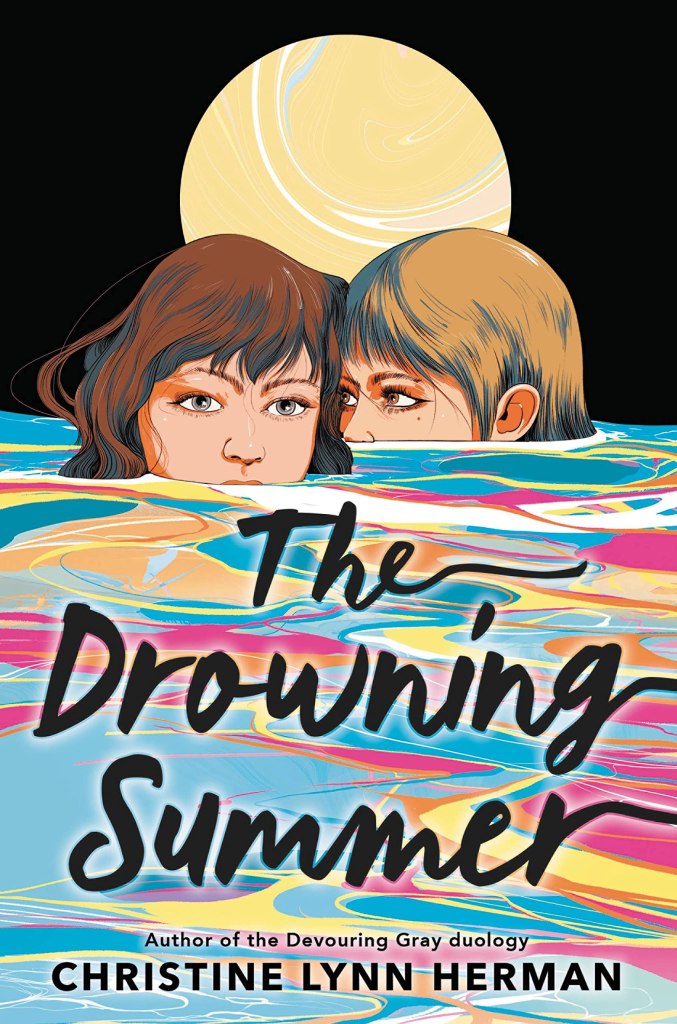
With the characters living in a small beach town, there are the requisite bonfires on the beach, and a downtown area filled with quaint little stores, and a mystery that is unsolved outside of the town’s whisper network. but this combination of elements feels classic, not stereotypical. A lot of that has to do with the characters, and how they interact with their world as if it were a real thing instead of a set of props acting as a backdrop for their plot-convenient problems. From the eccentric thrift store to the specialty reptile pet shop, there’s enough specificity and weight to these places that they feel, maybe not real, but real enough.
I loved both Mira and Evelyn, and the people who surrounded them—even, eventually and begrudgingly, Evelyn’s (ex)boyfriend, Nick. Sure, they’re all there because they’re needed for the plot, but they don’t feel like they exist solely for the purpose of a story. It’s a subtle distinction that can make or break a story for me. Perhaps even more impressive is how realistic the conflicts feel. It’s so easy for conflict to feel contrived in any media; how many romcoms would be resolved in about twenty minutes if the two leads would just talk to each other? How many teenage protagonists are refusing to ask a single adult for help for no good reason? But here, mistrust is earned and disagreements are rarely more dramatic than they need to be—while still not making the teens act like adults. The realism in the setting and people help make the ghosts also feel within reach.
Herman’s ghosts are mostly benign things whose chaos is a product of frustration, not malice—for the most part. Because in the same way that ghosts are real here, their energy can curdle and devour until it becomes something far more violent and demonic, raising the stakes of the mediums’ work. Mina’s family has always viewed ghosts as residual things caught between life and whatever happens after. Evelyn’s growing abilities give a contrasting viewpoint, that ghosts and their surrounding geography are connected in some ways. Who’s right and who’s wrong don’t matter as much as the way Mina and Evelyn exchange their own knowledge, which captures the sense of excitement and possibility about the world you get when you’re just figuring everything out, and which is far harder to come by in adulthood.
With ghosts and murderers lurking about, there’s more than a little horror in The Drowning Summer. But there’s also a little romance, like a splash of lavender syrup in lemonade. Often, it seems like romantic subplots need chiropractors from carrying the weight of an insubstantial plot on their shoulders. Or, characters feel like they’ve got about as much choice in careening toward a happily ever after as an out-of-control minecart. Worst, when thoughts of romance overpower every other thought, including mortal danger. Here, though, the spark feels real—heady and exciting and even unexpected—but doesn’t override every other plot thread in either character’s mind. Worth rooting for, but unnecessary to make me love either character just as they are. Grounded, but still as sweet as summer.

