
There’s big business in true crime, and I’m as guilty a consumer as anyone. I am, after all, a white Millennial woman, but true crime has been a lurid draw for years. Decades. Centuries?
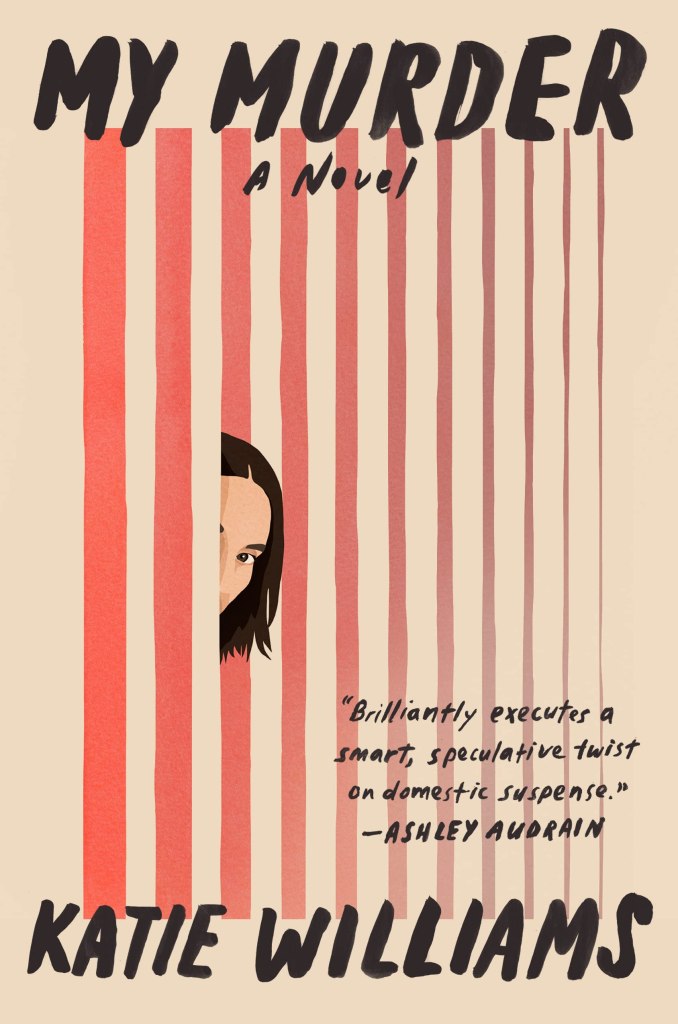
However long we’ve been collectively rubbernecking the grim and grisly, there’s no reason to suspect we’ll change in the future. Already, technology has given us more ways of taking in other people’s misfortune (binging true crime podcasts, anyone?). In Katie Williams’ My Murder, technology gives even victims a chance to steep in the public interest that comes with being a headline.
Lou is part of a support group for five women who were murdered by a confessed killer Edward Early and then brought back through a previously unpopular government project. It’s a little trippy for Lou, being a clone—her infant daughter doesn’t seem to be as attached to her as she remembers her being before her murder, and something strange and undefined still stands between her and her husband, Silas. The other members of the group have their own ways of dealing with the violence and healing of their deaths and subsequent revivals that range from zealously diving into this new lease on life to shutting out everyone and everything who knew the old them. This delicate balance is threatened when one member of the group works with a VR game developer to make a hyper-realistic virtual version of each murder.
Although Lou mostly stays at the fringes, she’s recruited by another member of the group wants her help to get answers from Edward Early before he is put into cryogenic rehabilitation. In the process, Lou unexpectedly finds questions she hadn’t thought to ask. Part of the cloning process is amnesia over the days leading up to each victims’ death, but Lou realizes her final days hold clues vital to finding out whether the story she’s always believed about her murder is true. Meanwhile, the game explodes with popularity, putting the five women’s murders back into the public eye, and playing their deaths over and over and over again.
True crime may be alluring, but Williams doesn’t mince words when it comes to who makes the most alluring victim, even in the future. The victims are all fair, fairly young, and fairly attractive. Lou takes the cake as the pretty young white mother of a pretty young white baby, taken from her quaint life by senseless violence. It’s her heart-rending story that brings the public support necessary to get the cloning program involved. This is no secret to Lou or anyone else, and Lou is also fully aware of how narrow a demographic she and the other victims represent.
The twin threads of Lou’s perception of the murders before and after she became one of them, and of the video game that allows people to replay each murder indefinitely, is not quite an indictment of crime media, especially as the book comes close to its conclusion. But it’s not a celebration, either. True crime obsession, Williams seems to argue, is a game that can really only be played by outsiders—any closer, and it becomes a different beast entirely. Lou was obsessed with the case before she was part of it, and her interest now is part of a quest for answers, not to be entertained by bloodied headlines. Before, she was sure she’d be smarter than the victims, while after she knows she failed on that front, and the game relishes in that failure. Yet some in the group, fellow murder victims, are obsessed with the game. Lou plays herself, but in secret when everyone else has gone to bed. There is something far more shameful in her ingestion of true crime now that she’s inexorably tied to it.
The questions Lou finds in her search for some kind of peace have no easy answer, and Williams took risks with the answers she eventually gave. It’s hard to say much about that ending without spoiling it entirely, but I’ll try. I’m not sure I would have chosen that direction, and there’s something that rings false about the before and after the character bridges, given what we know about the cloning process. At the same time, it further hammers the point of the assumptions made about crimes and the people involved in them. It’s a nice thought to think it wouldn’t be us. It’s a harder one to realize it could be, any day. And if that happens, some podcast, or streaming show, some crime drama, or some video game will be there to revel in it.
 Ring Reads