
There’s nothing wrong with an archetype or a plot that doesn’t stray far from its formula, especially if a story offers something fresh besides. That’s the case with Laurie L. Dove’s debut novel, Mask of the Deer Woman, where familiar and new propel the story, and its detective, forward.
Carrie Starr (but don’t call her Carrie) just started at her last-chance job as a marshal on the tribal reservation her father called home when an alleged missing persons case lands on her desk. Still reeling from the metaphorical hangover of her last job as a detective in Chicago and her teenage daughter’s brutal murder (and the literal hangover from the alcoholism that has spiraled out of control since her daughter’s death), Starr feels safe in assuming the missing woman has just wandered too far for her helicopter mother’s comfort. But the discovery of a body—of a woman other than the one gone missing—leads Starr to discover how many young women have gone missing on the rez over the last several years, and how little has been done about it.
The new revelation doesn’t banish Starr’s demons, but it does make her run harder from them as she digs into these long-abandoned cases and leverages her experience and contacts to try to find answers. But she’s not the only one standing in her own way. Other residents on the rez don’t trust her, even though they knew her father. In the town just outside the reservation’s borders, city officials welcome her, even as they work behind the scenes to ensure construction on an oil pipeline goes ahead as planned. And perhaps worst of all, Starr has begun to hallucinate. At least, that’s the most reasonable explanation she has for why a woman with deer antlers has begun appearing before her.
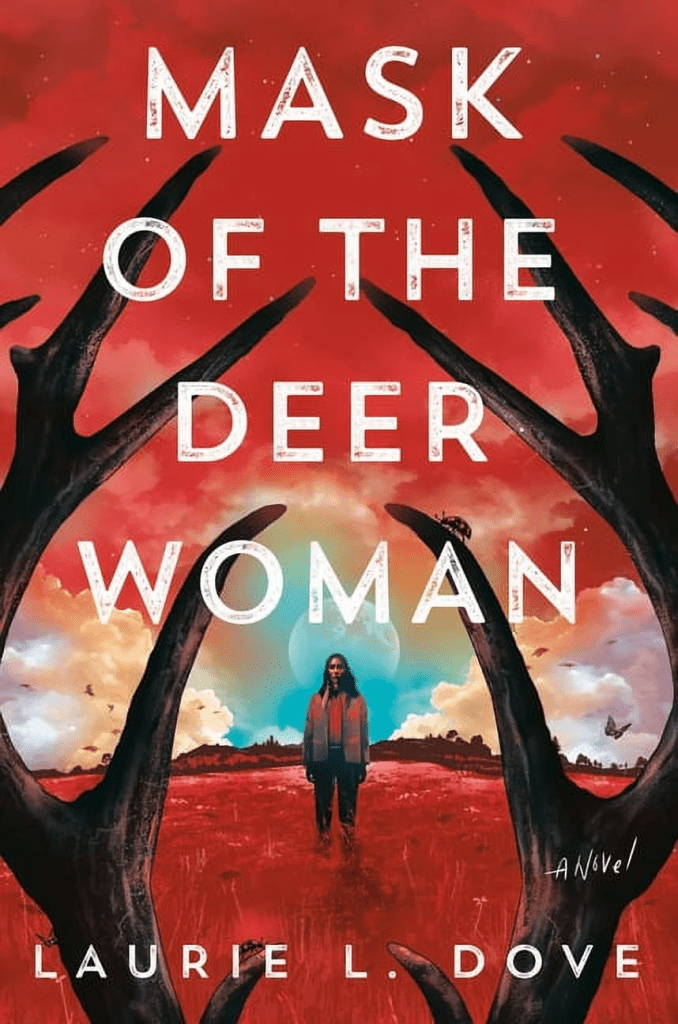
Starr’s character is grown in some familiar soil: a hard-drinking detective whose career and family trauma pull her in opposite directions, and she’s got one last chance to prove herself before she’s kicked off the force for good. Behind her taciturn exterior, though, is a more interesting and unique conflict. Starr was raised off the rez, at the insistence of her mother, but always felt incomplete ignoring her tribal half. At the same time, growing up outside the boundaries of the rez and her non-native half from her mother make her too much of an outsider to feel comfortable in her new post. Being of both worlds means she belongs to neither one, and this clash of identities gives Dove fertile ground for some terrific, nuanced characterization that takes Starr beyond her hard-boiled archetype.
Dove, who has tribal ancestry but was adopted and raised outside of a reservation, also uses Starr’s ruminations on identity to provide some of the most heartfelt, and beautifully written, passages in this book. “Maybe if she’d been raised here, been part of the rez, part of an extended family tree whose broken branches remained inextricably tied to one another, she would know about caves, about ghosts, about half lives and how to cure them,” Dove writes.
There’s plenty of nuance leftover for many of the side characters, particularly those with prickly demeanors or shadowy pasts. There’s none, however, wasted on the villains of this story, and those villains are telegraphed pretty early on. I don’t mind cackling villains, though I think villains in shades of gray who are convinced of their own righteousness are more interesting. What yanked me out of the story more was how there was often no thoughtful writing left for the villains, either. Not only do Dove’s villains cackle and monologue about their plans, they muse to themselves about “ungrateful plebeians” and say things like, “Au contraire!” to other villains. (No one in this novel is French.) The disjointed nature between the flowing river of words and characterizations afforded Starr and those she comes into contact with versus the gravel pit given to the villains makes Deer Woman feel at times as though it had been written by two authors taking turns, or composed of two different manuscripts shuffled together.
When Deer Woman is good, it’s so very, very good. When it’s not, it’s…fine. But I look forward to Dove’s future work, and hope her next novel lets her shine a little more consistently.
 Ring Reads