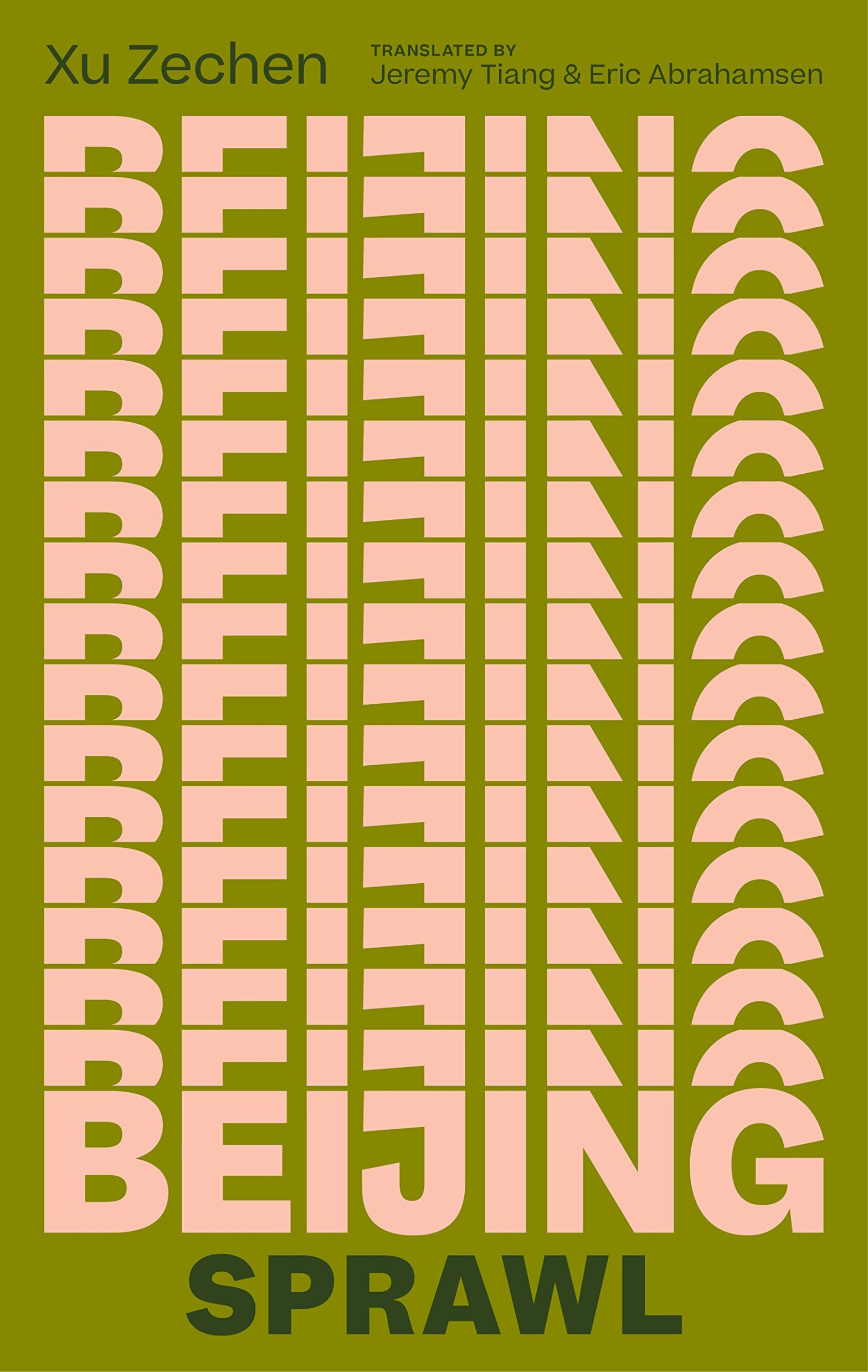
Often (not always), big books are big for a reason. Great writing, compelling plot, memorable characters, sharp commentary, maybe all of the above. But then there are the ones that are mind-bending, mind-blowing—the kind that make you look around and wonder why no one is talking about them. I’ve discovered a few gems like that hacking through my TBR here, and I recently found another one in Zechen Xu’s Beijing Sprawl, a series of interconnected stories as quiet as they are grounded.
Muyu was a promising student in his small village, but “weak nerves” made him too anxious to take his high school exams, let alone go to college. With no other prospects, he goes to Beijing to advertise fake IDs for his counterfeiter uncle. But it’s living with his three coworkers, also young and disaffected men, where the adventures, and personal growth, begin. From their interactions with friends, neighbors, acquaintances from back home, and the animals that also call Beijing home, Muyu gains a little more insight into this sprawling metropolis he now calls home—and a little more understanding of himself (but only a little; he is, after all, a 17-year-old boy).
Despite being in one of the largest cities in the world, the stories in Beijing Sprawl feel intimate, thanks in part to the excellent translation by Jeremy Tiang and Eric Abrahamsen. There is the slap of Muyu’s feet on the pavement as he runs and runs and runs in hopes of strengthening his anxious little “weak nerves.” There are flocks of pigeons whirling and cooing (and leaving droppings). There are fruit-stand owners and dumpling makers and camera salesmen, buskers and migrants looking for their long-lost brothers (or something like it). And in this community of people coming from all over the place and struggling for a foothold in the city is a microcosm of hope and yearning and heartbreak, and Muyu and his roommates get just a taste of all of it in their heady young-adult years. (One small note for my content warning-conscious people: animal lovers may want to skip the final, and shortest, story.)
It could be my love for Beijing Sprawl comes in part because of the global moment in which I’ve been reading it. When the problems in the wide-angle lens are too much to handle, I’ve found it’s helpful to shrink that lens until it becomes manageable. These days, I’m not able to handle much more than the equivalent of a single ladybug crawling on a dewy blade of grass in the gentle sunshine. The stories within Beijing Sprawl aren’t cozy or happy, necessarily, but they feel like they capture a moment of life that will become nostalgic, and that growing nostalgia bleeds through the page. You can try to guess the timeline based on the context clues of beepers and the Backstreet Boys, but there are no geopolitical events to center us, no grand pieces of history that Muyu and his roommates witness or are a part of.
But this isn’t slice of life, it’s simply life the way most of us live, focused on the very small things we can control even if we have our own dreams of greatness. There’s a lot of comfort to be gained in that, and perspective, all on a path laid with lovely, quiet words.
 Ring Reads