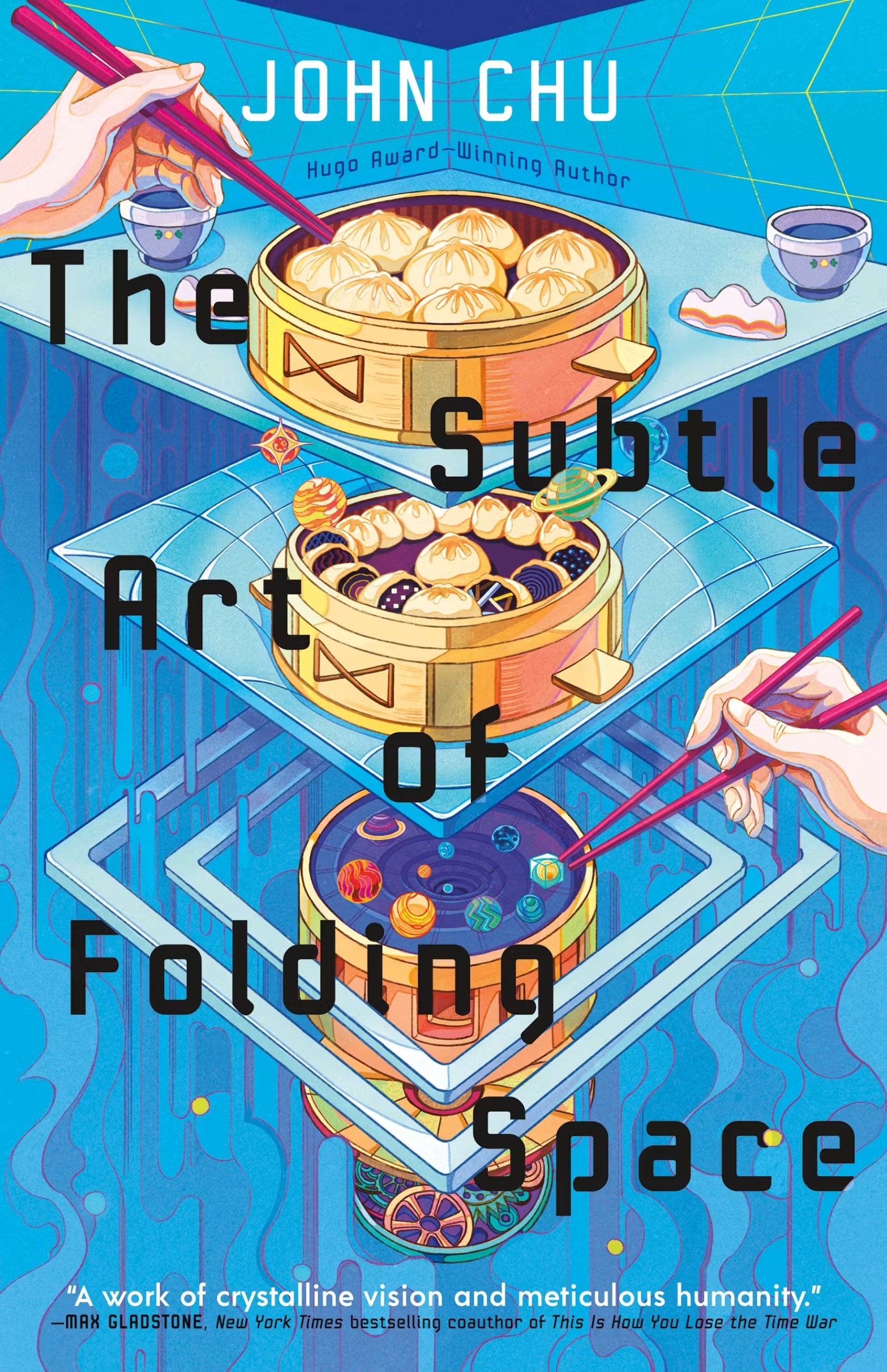
It’s not an uncommon trope in fiction, especially speculative fiction, to discover some secret world beyond our own comprehension, some complex system just beyond our vision that nonetheless controls our lives. In The Subtle Art of Folding Space, Hugo-winner John Chu’s debut novel, there’s a whole lot nudging reality along, and there are a whole lot of people who would do anything to be in control of the nudging.
There’s something amiss in the skunkworks, the stuff between the walls of the universe that controls how the laws of space and time operate. As Ellie and her cousin, Daniel, examine the illegal device, they realize that it’s causing a litany of destabilizing problems. It’s also keeping alive Ellie’s mother, a legend in the skunkworks who has fallen into a coma. Ellie makes the choice she knows her mother would, to disarm the device, but doing so launches Ellie into a world of secret factions all vying to make their vision of the skunkworks come to life.
Everything Ellie’s mom taught her, technically and ethically, comes into new focus. So does everything she thought she knew about Daniel, who isn’t quite as surprised by the secret battles raging as Ellie is. On top of the new threats, Ellie still has to contend with the literal death traps her sister, Chris, regularly sets for her. With their mother gone, Chris’s attempts at sororicide and her verbal blows reach new vigor. But there are signs that Chris might be softening, too, now that she and Ellie have only each other. With alliances and grievances tangled as tightly as the skunkworks, Ellie can only hope she’s good enough at untangling both to stay alive.
The technical aspects of what it actually takes to be in the skunkworks is described minutely in some ways and hand-waved over in others, and to great effect. There was plenty of ground for me to imagine plenty of tangled knots and the careful task of untangling them, both within the book and long after I closed it. It’s the kind of technical expertise it’s fun to think of others having, and that kind of competence porn is much more enjoyable than if Ellie had bumbled along as some sort of chosen one. Not every knot is untangled easily, and not every problem can be solved no matter the skill, but I’d watch Ellie try all day. The events propelling Ellie and Daniel do come rapidly—perhaps a lingering quality from Chu’s well-honed short-story chops that translates a little dizzyingly to the novel.
Even in a book about bending space and having the ability to change the laws of the universe, Ellie’s continued hope that Chris will come around strained credulity. Chu well establishes that Chris always launched her barbs, literal and figurative, behind their mother’s back, and were so egregious that telling on Chris was far from believable. And in the context of this world where the rules of the universe are only the rules of the universe if you don’t have the know-how to change them, it’s fair that sibling strife could, and would, be heightened. In fiction, it’s fair to make disagreements a little more dramatic for the plot, and to make sure readers with lower reading comprehension don’t get lost in the realism. But this dynamic was a little over the top to me, both in the severity of Chris’ abuse and Ellie’s enduring willingness to keep that relationship open. Then again, Ellie doesn’t wear her anguish on her sleeve, even when she’s the one effectively pulling the plug on her mother. A little more introspection might have made that emotion a stronger driver throughout the story.
The sibling dynamic isn’t the only family-centered plot element in play. There’s a lot of generational trauma at play, including from heritage and immigration. A good amount of insecurity about measuring up both in the skunkworks and as a daughter another generation separated from the ancestral homeland drives Ellie—and, we eventually learn, Chris. But Daniel also comes from the same family, and was even raised alongside the girls for a time after his own parents kicked him out. It’s a twisted dynamic that doesn’t seem malicious, exactly, but outside of Daniel and Ellie’s relationship, it also doesn’t seem to have anything going for it but the fact of shared heritage. I was never hoping for warm fuzzies from the family, but it’s another aspect of the story that might have been strengthened with a little more work to help us feel the complexity of the relationships rather than just showing the insistence of maintaining them.
That insistence, though, does still drive the story forward as Ellie and Daniel seek this clue and that. And above all else, this story about shifting in between the walls of reality to fix (or break) the universe is fun. It’s playing with the laws of the universe; how could it not be?

