There’s a real power in stories, in their existence as well as in how they’re told. I’ve always loved the way Nate DiMeo has gone about telling stories from history in his long-running podcast, The Memory Palace. The book by the same name collecting many of those old episodes, plus many more new stories, carries the same experience of a 15-minute podcast through a 300-page book.
The Memory Palace has always given a dreamy sort of quality to its stories of historical events and unusual biographies. Like other podcasts-adapted-into-books, the unique writing style carries over well to the page, and it’s another one I’ve listened to enough that I could practically hear DiMeo’s voice as I read (literally, in the case of the audiobook). Sometimes this sensation of binge-listening to the podcast can wear thin after several chapters, but The Memory Palace wore far better than most. There’s a sense of some real thought being put into the reader experience in the book’s various forms.
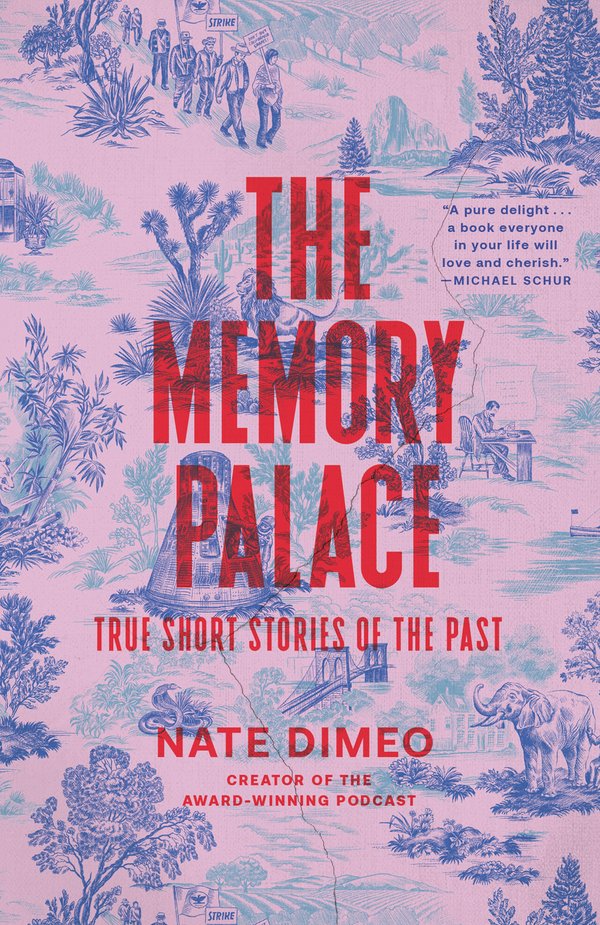
In the print version, photographs of the stories’ characters liven the text, while the audiobook features a whole cast of other voices, from other podcasters like Song Exploder’s Hrishikesh Hirway and 99 Percent Invisible‘s Roman Mars to actors like Ryan Reynolds and (beloved character actress) Margo Martindale. The guests were, according to DiMeo, to give a fresh touchup to stories that he’d already read for the podcast, but I also found the sprinkling of other voices nicely shake up the sameness of a voice that can come in any audiobook after a while.
I came for the collected essays, was delighted by the new ones, but it was DiMeo’s personal essay at the end that caught me off guard. His recollection of discovering history not as dates but as stories is interesting, but his account of struggling through a slog of problems at school, later revealed to be symptoms of an undiagnosed medical issue, hit me the hardest. In an age of parasocial relationships, it’s understandable, and even wise, for creators to hold back pieces of themselves lest it be taken and misused by someone in the audience. But there’s strength in sharing, too. I had similar academic struggles and a similar diagnosis, but never connected one to the other.
Within history, it’s easy to draw lines between the dots of facts and anecdotes that have survived and decide we know the whole picture. DiMeo’s work has always sought to challenge those assumptions, or at least provide another dot or two to draw lines from. This is the connection and assumptive complication I came to The Memory Palace for. But there are stories we tell ourselves, and in DiMeo’s personal essay and the lines he himself drew between the facts of his youth, I found unexpected clarity in my own story. Even without that, I relished this book, and look forward to revisiting it whenever I need a little story-shaped comfort.

