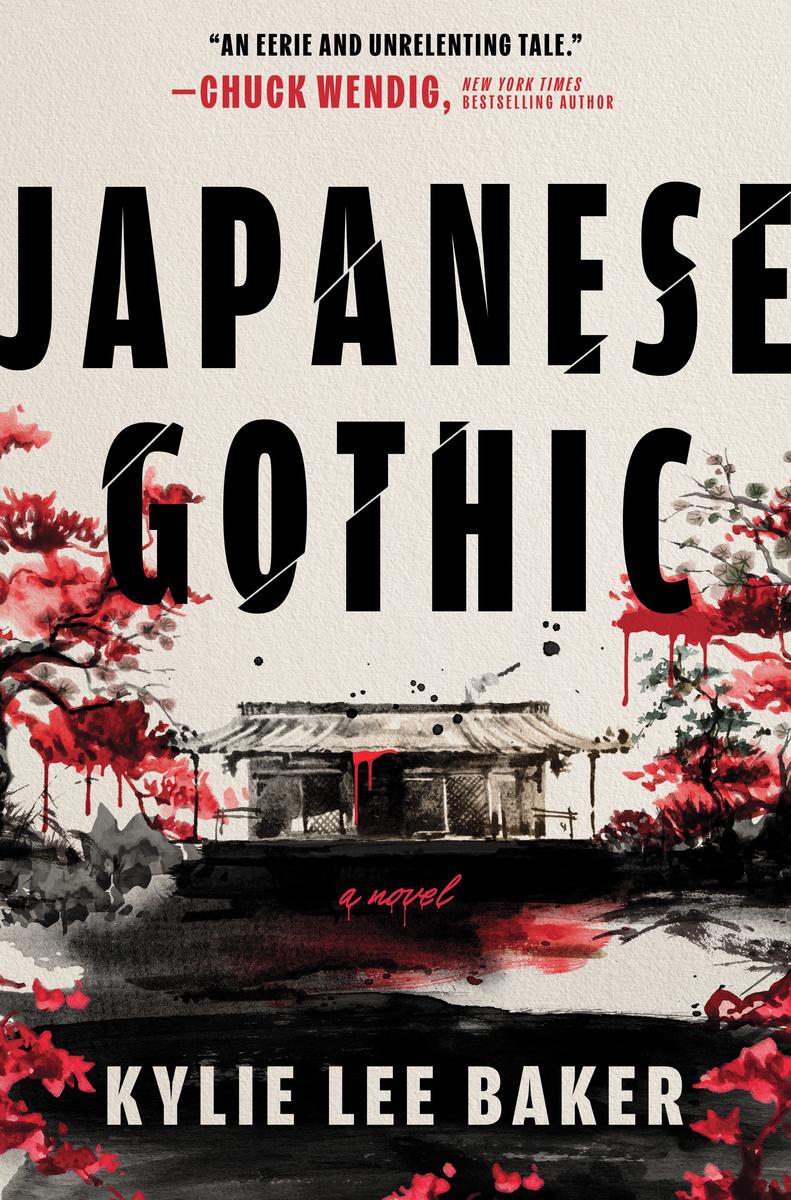
I once saw a video essay about the weirdly intimate connection we have with people who used to live in the same places we do: the way the sun shines through the window in the morning, the way the air smells when we turn on the heat, the precise swirls in the ceiling plaster. It’s a little bit of a haunting, in a way, or a portal through time. Kylie Lee Baker takes both concepts literally in her latest novel, Japanese Gothic.
Lee isn’t the first college kid to drop out and move back in with his dad, but not every mid-semester dropout makes that move to Japan—or to outrun the authorities who will surely be asking questions once they find his murdered roommate’s body. At least Lee’s dad and his new Japanese girlfriend don’t mind Lee moving coming to stay. Even if Lee could ignore his mounting paranoia in this temporary sanctuary, he can’t forget the mysterious and violent end that came to his mother. To make matters worse, he’s pretty sure he’s seeing the ghost of a teenage girl in his bedroom closet.
Meanwhile, Sen is trying hard to follow in her father’s footsteps, even though being a samurai has been outlawed after a failed samurai rebellion. Becoming the warrior her father needs her to be is more important than ever; the family might be safe, if starving, in this house hidden by the forest, but the emperor’s troops are hunting down the rebels, including her father. She’s certainly got enough on her mind without discovering the spirit of a young man in her bedroom—a spirit who claims he’s from the future. As Lee and Sen’s pasts, presents, and futures collide through their shared living space, they warily test how real the other is, and how this clash between timelines could help them solve their respective problems.
As with Bat Eater and Other Names for Cora Zeng, Baker’s previous (and excellent) book, the prose in Japanese Gothic is tight and tense. James remembers murdering his roommate multiple times, though the account differs each time. He’s an unreliable narrator, especially to himself. He’s more confident in the details of his mother’s disappearance and murder, though his understanding of that event, too, eventually betrays him. Sen’s got a better handle on reality, though reality at the hands of her father and her indoctrinated zealousness is bleak enough to make you wish, for her sake, that she could borrow some of Lee’s hallucinations. But Baker’s pacing is quick enough, and the story compelling enough to keep the violence and characters’ hopelessness from bleeding too heavily into the reader. It can be painful to read, sure, but there’s something perversely satisfying to it, too, like pushing on a yellowing bruise.
Sen is a far easier character to root for than James, though his situation is, though equally bleak, at least a more or less a mess of his own making. Whatever authorities may or may not be after him will come because of the blood on his hands. Between the daily threat of Sen’s father’s anger and the looming promise of annihilation from the emperor’s forces, it’s clear that no amount of swordplay can save her or her family. Nevertheless, she keeps training, keeps sharpening her wits and her blade. The futility is as heartbreaking as it is inspiring, really capturing that youthful misunderstanding of the world that assumes just a little more effort can make anything bend to your favor.
But when her bedroom can be a portal into the future, can anyone blame her for thinking her own future may not be set in stone? And when the truth of inevitability does settle in, it doesn’t keep her from trying to fine-tune the details of her destiny. I did not open up Japanese Gothic expecting life lessons from a doomed samurai-in-training or a probable murderer with mommy issues, but life is full of surprises. Come for the blood, but stay for the healing tenderness around the wound.

